| Term | Meaning | Usage |
|---|---|---|
| Ashi | foot | |
| Ashikatana | footblade | Tobi ashikatana geri |
| Ato | behind | Hije no ato tsuki |
| Barai | sweep away | Gedan barai seiken tsuki |
| Bubishi | manual of military preparations | |
| Budoka | one who resolves conflict | |
| Bushi Matsumura | Bubishi: the Bible of Karate | |
| Chinto | ||
| Choki Motobu | ||
| Choku | direct, straight | Gedan barai go den choku tsuki |
| Chotoku Kyan | ||
| Chudan | middle level | Chudan uke seiken tsuki Dashi |
| Empi | elbow | Wansu Kata Empi [Shotokan] |
| Gedan | low level | Gedan barai seiken tsuki |
| Geri | kick | |
| Go Den | five ?den? | Chudan uke go den choku tsuki |
| Gojo Ryu | school of Karate founded by Miyagi Chojun | |
| Gyaku | reverse, opposite | Seiken Gyaku Tsuki |
| Hanshi | master teacher, model scholar | Hanshi Willie Adams |
| Hidari | left | |
| Hije | elbow | Hije no ato tsuki |
| Hiza | knee | |
| Ibuki | breath, breathing | |
| Ippon | one point (in a contest) | Judo win |
| Ippon Kumite | one form sparing | |
| Ippon Nukite | one finger spear hand | "Eye like ping pong ball." |
| Isshinryu | One heart way | |
| Jōdan | upper level | Jodan gyaku tsuki |
| Kara | Chinese | karate (Chinese hand) |
| Karate | empty hand; Chinese hand | Karate |
| Karate Dō | modern martial way derived from karate jutsu (techniques) [empty hand way] | Isshinryu Karate |
| Karateka | karate expert | Kyoshi Joslin's dan students |
| Kiai | spirit shout; unification of mind and body with a focused shout originating from the lower abdomen [spirit unification] | |
| Kiai Dori | hypnotism; spirit seizing techniques | Kiai |
| Kin | gold, testicles | Kin Geri |
| Ki o tsuke | attention, watch out | |
| Konate | Mae Konate | |
| Kumite | sparring | |
| Kusanku | ||
| Kyōshi | teacher [doctrinal teacher] | Kyoshi Joslin |
| Mawashi | turn, go around | Mawashi geri (roundhouse kick) |
| Mae | front; before; ago | Mae Geri |
| Mawari | turn, go around | Mawari geri (roundhouse kick) |
| Migi | right | |
| Naihan | ||
| Naihanchin [Okinawan] Naihansen [Japanese] | fighting on a levee | |
| Naihanchi Dashi | iron horse stance | |
| Neki Dachi | cat stance | |
| Nukite | spear hand | Tegata Barai Nukite |
| Oi | lunge | implies pursuit: oi tsuki or oi uchi are attacks where you're really going after your opponent |
| Otoshi | drop; trap door; throw, throw down | Otoshi Geri |
| O-Uchi | ??? | O-Uchi O-Uchi |
| Rei | bow, courtesy, appreciation, remuneration, return present | |
| Renshi | instructor [drill instructor] | Renshi Bennati |
| Ryō | both; two | Ryo Ashi Geri |
| Ryu | style, school, system | Issinryu |
| Sanchin | three conflicts, mind/body/chi | |
| Sanchin Dachi [Okinawian] | hourglass stance | |
| Seiken | regular fist | Seiken oi Tsuki |
| Seiken Tsuki | thrust with regular fist | Jodan Uke Seiken Tsuki |
| Seisan | thirteen | |
| Seiuchin Kata | war kata, the storm within the calm, the lull in the storm, | |
| Sensei | teacher | |
| Shiai | competition | |
| Shorin-Ryu | ||
| Shotokan | ||
| Shuri Okinawa | ||
| Shutō | hand blade | Shuto Uchi Shuto Uchi |
| Soba | ???side??? | Soba Konate |
| Sokutō | outer edge of foot [foot blade] | Sokuto Geri |
| Tatsuo Shimabuku | ||
| Te | hand, arm; trick; skill | Tegatana, Te Waza, karate |
| Tegatana | hand blade | Tegata barai nukite |
| Tobi | fly, skip, jump; spring up | Mae Tobi Geri |
| Tomari Okinawa | ||
| Tonbo | dragonfly | Tonbo Geri |
| Tori | hold, capture; performer | katate tori; tori attacks |
| Tsuki (Zuki) | thrust, poke, strike | |
| Uchi | [depends on kanji] attack; inside, within, among; strike, hit, beat | O-Uchi O-Uchi, Uchi Gama |
| Uke | receive, accept; block; parry | uke defends; gedon uke seiken tsuki |
| Uki | float | Uki Otoshi |
| Ura | back, reverse, palm, sole | Ura uchi seiken tsuki |
| Uraken | backfist | Seiuchin Kata, Naihanchi Kata |
| Ushiro | rear, behind, back | Mae Geri Ushiro Geri |
| Wansu | Wansu Kata | |
| Wasa | art, technique, performance | Shime wasa, Henka wasa |
| Yoko | side | yoko geri |
| Zarei | bow while sitting | |
| Zanshin | remaining mind | |
| Zenkutsu | leaning forward | Zenkutsu Dachi |
| Zenkutsu Dachi | forward stance | Zenkutsu Dachi |
Wednesday, April 1, 2020
Karate Glossary

Saturday, August 24, 2013
The Nuts and Bolts of Standing Meditation
by Mark Cohen
Author of Inside Zhan Zhuang (2013).
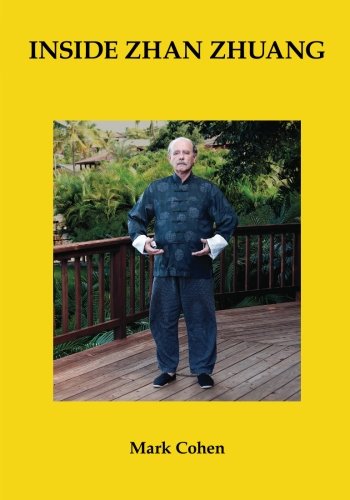
The Nuts and Bolts of Standing Meditation.
Part 1 continues with the basic alignments and body mechanics, opening the midriff to stretch the spine, finding your center from the back, feeling the five points, the low Dan Tien and Mingmen, explanation of the Kua, the biggest "joint" in the body, connecting the lines of gravity - front, back outside and inside.
Part 2 summarizes, reviews and continues with the basic components of the Wuji posture, position of the legs, unlocking the knees, using gravity to release blockages, explanation of SUNG, the body's ideal state. Surrendering to gravity - dropping the weight below the feet, the two types of muscles - mobilizers and stabilizers.
Part 3 concludes with the breath - half-moon and whole-body breathing, the chi breathing point, the Psoas muscles and the hanging basket - suspending the pelvis, closing technique for ending each practice session, how to apply what you've learned and what to expect as you explore the Wuji standing meditation practice.
Wednesday, September 5, 2012
Leadership
The United States Army Leadership Field Manual states that a military leader of “character and competence acts to achieve excellence.” He must be imbued with the values of loyalty, duty, respect, selfless service, honor, integrity, and personal courage. He must continually work to develop his mental, physical, and emotional skills to their fullest. He must demonstrate superior interpersonal, conceptual, technical, and tactical skills. He must demonstrate the ability to act via influencing others (through communication, decision-making, and motivation); by planning, executing the plan, and assessing it; and by improving himself by learning from experience. Above all, he must set the tone in preconditioning the will of his subordinates to sacrifice their lives if necessary. The only consistently credible way to do this—if the history of great military leadership is any guide—is to lead from the front as much as possible and share the risk of death with the lowliest foot soldier. Such a philosophy of leadership may underline why the Israeli and American armies are often thought of as the best military organizations today on the small-unit level.
(Above from The Modern Scholar class Command and Control by Prof. Mark R. Polelle.)
(Above from The Modern Scholar class Command and Control by Prof. Mark R. Polelle.)
Thursday, July 19, 2012
Interval Cardio Warm Up, 14 minutes
A 14 minute treadmill cardiovascular warm up routine. It takes less than 15 minutes to complete and since you can do almost anything for 15 minutes; there are no excuses, nike!
| Elapsed Time | Duration (Minutes) | Intensity | Incline | Heart Rate | Zone |
|---|---|---|---|---|---|
| 0 | 2 | 3.0 | 0 | 98 - 114 | fitness |
| 2 | 1 | 3.8 | 0 | 114 - 131 | aerobic |
| 3 | 1 | 3.8 | 3.0 | 131 - 147 | anaerobic |
| 4 | 1.5 | 3.0 | 6.0 | 131 - 147 | anaerobic |
| 5.5 | 2.5 | 3.8 | < 5.0 | 147 - 164 | VO2 max |
| 8 | 1 | 3.0 | 6.5 - 7.5 | 131 - 147 | anaerobic |
| 9 | 2.5 | 3.8 | 3.0 | 114 - 131 | aerobic |
| 11.5 | 3 | 3.2 | 1 - 2 | 98 - 114 | fitness |
Friday, June 15, 2012
Upper-body curcuit #1
Although labeled 'upper-body' this is a great workout for the quads as well.
- Squat to row cables (35 lbs) x 15
- Bicep curl (red band) x 12
- Single lateral raise (red band) x 12
- Wu chi (30 seconds)
Lower-body circuit #1
This is the first circuit that I am adding to my bi-weekly training routine.
- Step-up with lateral arm raise (5 lbs per hand) x 10 per leg
- One leg single shoulder press (10 lbs) x 12
- Medicine ball slams (full extention into squat) x 15
- Wu chi 30 seconds
Wednesday, March 16, 2011
Kata Application Evaluation Checklist: Principles
To evaluate a potential kata application, check the items that apply.
- More than one proper interpretation exists.
- Every technique should be able to immediately end the fight.
- Strike to disrupt; disrupt to strike.
- Nerve strikes are "extra credit".
- Work with the adrenaline rush, not against it.
- Techniques must work at full speed and power.
- Application must work on an "unwilling" partner.
- Understand why it works.
- Deception is not real.
- If you are not there, you cannot get hit.
- Cross the T to escape.
- Stances aren't just for kata.
- Don't forget to breathe.
- Use both hands.
- A lock or hold is not a primary fighting technique.
Use this checklist to decide if a kata is golden or possibly sub-optimal. A sub-optimal evaluation might indicate that you have not been taught the "real" kata. See also the other two parts of this Checklist; Rules and Other Considerations.
From The Way of Kata: A Comprehensive Guide for Deciphering Martial Applications by Lawrence A. Kane and Kris Wilder (2005).
Kata Application Evaluation Checklist: Rules
To evaluate a potential kata application, check the items that apply.
- Do not be deceived by the embusen rule.
- Advancing techniques simply attack, while retreating techniques imply defense.
- There is only one enemy at a time.
- Every movement in kata has martial meaning/significance.
- A hand returning to chamber usually has something in it.
- Utilize the shortest distance to your opponent.
- Control an opponent's head and you control the opponent.
- There is no "block".
- Kata demonstrate the proper angles.
- Touching your own body in kata indicates touching your opponent.
- Contour the body—strike hard to soft and soft to hard.
- There is no pause.
Use this checklist to decide if a kata is golden or possibly sub-optimal. A sub-optimal evaluation might indicate that you have not been taught the "real" kata. See also the other two parts of this Checklist; Principles and Other Considerations.
From The Way of Kata: A Comprehensive Guide for Deciphering Martial Applications by Lawrence A. Kane and Kris Wilder (2005).
Kata Application Evaluation Checklist: Other Considerations
To evaluate a potential kata application, check the items that apply.
- Consistent with style's strategy.
- Built on natural physiological reaction.
Use this checklist to decide if a kata is golden or possibly sub-optimal. A sub-optimal evaluation might indicate that you have not been taught the "real" kata. See also the other two parts of this Checklist; Principles and Rules.
From The Way of Kata: A Comprehensive Guide for Deciphering Martial Applications by Lawrence A. Kane and Kris Wilder (2005).
Tuesday, March 15, 2011
Permission
From Sensei to Student.
- You have permission to defend yourself.
- You have permission to be rude.
- You have permission to survive, no matter what it takes.
- You have permission to act when the scary man reaches for his belt. You do not need to wait until he draws the weapon or until he points it at your, or until he hurts you. You have permission to beat me, even it I wear a black belt.
- You have permission to become better than the best instructor you ever had.
- You have permission to invent something better than I ever taught you, permission to use it in my class, permission to use it to defeat me, and permission to teach it to your students.
- You have blanket permission to grow and live and survive and fight and run and scream and talk and play and laugh and learn and experiment and sing and dance. You have permission to win, and you have permission to decide what winning is.
- You have permission to act.
- You have permission to be amazing!
Adapted from Rory Miller's Meditations on Violence: A comparison of Martial Arts Training & Real World Violence, 2008.
Friday, March 11, 2011
On Kata - Learn to Move
Excerpt from Rory Miller's Meditations on Violence: A comparison of Martial Arts Training & Real World Violence, 2008.
"Kata is to be done in an air of distrust."—Shuzaku Shitama, 16th dai-shihan of Sosuishitsu-ryu
To me, it looks like kata is all about hands, shoulders, and hips working together simultaneously with a drop in center of gravity (COG). This is one of the most potent systems of power generation. This is a potent system regardless of whether the action is interpreted as a strike, a lock, or a throw.
The more possibilities you see in anything, the more options you have. Since the actions can be interpreted effectively in so many ways, kata may be more powerful as a training tool if you see none of those (or all of them) than if you decide it is just one of them. As long as the hips, hands, shoulders, and COG work together, there is no difference anyway. Karateka get in their own way when they try to dig into the "deeper secrets" of their movement. Learn to move. Kata is excellent for that. Then reproduce or experience the dynamics of actual conflict and you will see how much really valid technique there is in the old forms.
"Kata is to be done in an air of distrust."—Shuzaku Shitama, 16th dai-shihan of Sosuishitsu-ryu
Friday, December 24, 2010
Sanchin Kata
Sanchin literally translates to the three conflicts (traditional Chinese medicine): mind, body, and spirit (breath/Chi). Sanchin Kata teaches us how to unite the three conflicts into one indestructible karateka. We learn to reduce the conflicts and harmonize the mind, spirit and body.
Sanchin is an isokenetic exercise, it uses dynamic tension and ibuki breath as in Seiuchin Kata. The training reminds me of my Jujitsu practice of hitting my rock and pounding the body after cultivating the Qi. There is a lot of stuff going on in the kata that requires the study of Traditional Chinese Medicine (TCM) and guidance of a knowledgeable sensei.
(Remind me to get back to the Bubishi.)
Prof. Jenkin's Martial Arts Dictionary tells us that the Japanese word sansen, three conflicts, is pronounced "sanchin" in Okinawa and that sansen dachi is the hourglass stance (pronounced "sanchin dachi" in Okinawa.) Does the hourglass (saam chien) stance get its name from the old Chinese quan or is Saam Chien (Sanchin) named after the stance?
The following links are not recommendations, just things I found that are at least somewhat informative. The information about Traditional Chinese Medicine in some of these links is not at all accurate (writers are not TCM practitioners.)
- Sanchin - the three conflicts. Blog post by someone who actually practices the kata and studied with a teacher who understood the kata. Good information about how to train using Sanchin Kata.
- Sanchin from a western medical perspective (can not vouch for this article at this time).
- Sanchin kata, three conflicts and three Jewel (part 1)
- Sanchin kata, three conflicts and three Jewel (part 2)
- Shihan John Lehner's email on Sanchin Kata.
- Sanchin Kata history from a Goju Ryu perspective.
- The Five Principles of Sanchin (Author IMHO has a western view point, doesn't get it.)
Thursday, December 16, 2010
Tomari Okinawa
The village of Tomari Okinawa is the home of Wansu Kata and Banssai Kata.
Grand Master Shimabuku, founder of Isshinryu Karate, learned this kata from his teacher Master Chotoku Kyan.
Thursday, December 9, 2010
Chinese Hidden Foot
Kioshi Dave Joslin talked about the use of Chinese Hidden Foot as a defensive technique in tonight's class. In particular, Wansu Kata uses Chinese Hidden Foot to move off the line of attack quickly.
It is quick and turns the body so that a center line attach becomes a glancing blow if it connects at all.
In my Jujitsu training we would traverse the length of the dojo using Chinese Hidden Foot both passing the leg behind and in front. Facing the Shomen through out, moving down to the right and back to the left. Keep the knees bent and the head below the imaginary ceiling fans five feet off the mat. Another cool drill is to move down the line switching from hidden foot to horse stance (by turn 180° on the balls of the feet.)
Tuesday, December 7, 2010
Indomitable Spirit
Tamashii—Indomitable Spirit
Merriam-Webster definition; incapable of being subdued : unconquerable.
Im my dojo indomitable spirit is much more than a "can do" attidude. More then "Never surrender, never say die." or "Never give up, never surrender! ". It is a commitment to personal excellence and fortitude in everything we do.
Old Japanese saying, Nana-korobi, ya-oki. This means fall down seven times, get up eight.
The concept of One Encounter, One Chance, is part of the Japanese milieu that includes Tamashii. Do it the first time, there is no second place in a duel.
Sunday, December 5, 2010
Karate in YOUNG JUNIUS
What follows is an insightful description of the mind of a beginning Karate/Kung Fu student, excerpt from Chapter 30 of YOUNG JUNIUS by Seth Harwood.
 I am reading this book on my Kindle and thoroughly enjoying it. (I think the published book is significantly better than the original podcast draft, much tighter story and cleaner descriptions of the world these people live in.) Recommend the book if you like action fiction and enjoyed The Wire series. This book is not for your minivan, so put on your headphones or read the printed word.
He stepped to that side of the roof and launched into his first form, the punch combination that started off the Monkey Sequence. The Monkey was familiar to him but to get to the next level he had to learn the Tiger perfectly so he could test for his purple belt. Purple marked the turning point between know-nothing beginner and respectable mid-level student. He’d been going for close to three months now and was eager to make the jump.
Purple was a dark color, so different from yellow, white, or orange. Just the fact that you had a dark color around your midsection made you look like you were on your way. Dark belts were real.
The Monkey started with a series of punches and then slide-steps with blocks that led to kicks. As Rough started into these, he gradually left his thoughts behind. As he went on, he started to punch harder, kick with more force. His body loosened up.
In ten minutes, he had his jacket off and was practicing the opening of Tiger. It felt good to sweat in the cold wind, to move faster than when he started, to go through the Monkey as fast as he could.
Now just the start of Tiger was his challenge: to go through it clean and as fast as he could. It was just seven punches, four blocks, and three kicks, with steps and changes of direction in between, but it made for enough of a challenge. He ran through the sequence in his head: punches, blocks, kicks.
I am reading this book on my Kindle and thoroughly enjoying it. (I think the published book is significantly better than the original podcast draft, much tighter story and cleaner descriptions of the world these people live in.) Recommend the book if you like action fiction and enjoyed The Wire series. This book is not for your minivan, so put on your headphones or read the printed word. The podcast of the story, printed book and/or eBook versions available at all the usual places and at SethHarwood.com.
Tuesday, November 9, 2010
Naihanchi Kata - Details
The Japanese Martial Arts Character Dictionary by Prof. Thomas R. Jenkins says that "naihanchin" is the Okinawan word for the Japanese word "naihansen", fighting on a levee.
Other Japanese words that seem applicable based on their kanji are:
- Naihan—on a levee
- Nai—inside (first kanji in naihansen)
Monday, November 1, 2010
Nose Bleeds and Hanaji Tome
 A recent podcast by the House Call Doctor's, When Should You Worry About A Nosebleed, prompted me to post this response. I want to add the new (to me) information gleaned from Dr. Rob's podcast.
Hanaji Tome—nose bleed stop resuscitation—is from the Kappo list of Danzan Ryu Jujitsu. The following is my take on Hanaji Tome and mine alone, all errors, misinterpretations and/or bogusness is mine and should in no way reflect upon of my teachers.
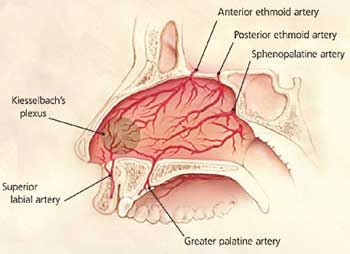
First of all let me say that all the wonderful Jujitsu recession technique do work and do fail to work, I've see it myself. Stopping a bleed is particularly difficult when the patient is taking blood thinners (anti-coagulants) like baby aspirin.
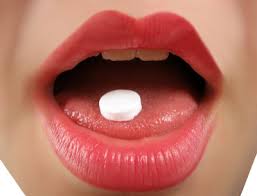 Many health conscious martial artists over 40 years of age self medicate with aspirin but then again they don't seem to get punched in the nose very often.
Although a nose bleed is not life threatening to the patient the risk of blood born pathogens must be considered with helping someone. Any time you may come in contact with someone else's blood the use of personal protective equipment (PPE) is strongly encouraged.
Anterior nose bleed is what we see on the playground and in the dojo, from the Kesselbach's plexus. Posterior nose bleeds, the other type, are very serious that generally require hospitalization/surgery.
Dr. Rob's 5 tips for Dealing with a Nosebleed.
- Don't Panic
- Blow your nose
- Use a decongestant nasal spray
- Hold the nose
- Insert cotton and apply ice to the bridge of the nose
Saturday, October 30, 2010
Camp Kodenkan South, 2010
Aloha Sensei, black belts and alumni campers!
We are yet again at the point of announcing Camp South with pleasure 2010! This year we will be at Camp Fox in the San Diego mountains. We will have exams on Friday and our usual class schedule and events over the full weekend.
I wish this year to extend a welcome to those who have not yet attended camp before or to those with whom it has been some time. We all have so many demands on our time and money these days, we within the AJJF, tend to pick our favorites and miss other wonderful events available to us. I remember the times when a few events a year was all there was! But those days are gone and I for one am very happy with all the possibilities open to us within the AJJF DZR experience.
Nevertheless, we hope for those who have not come might consider this year attend camp. For those who come yearly we thank you and look forward to seeing you this year as well!
Camp offers 6 meals, sleeping quarters and all the classes at one location. This year the fee will be the same as last year, that being: $180.00! This is 6 meals, room and all classes. We also will transport those who come in by plane at the San Diego airport to and fro.
There will be an email coming soon giving all the details about camp and who is teaching, classes, etc. But for now, let me announce the weekend it falls on each year is the first weekend of December. This year that will be Friday the 3rd, Saturday the 4th and Sunday the 5th.
Hope you will consider camp in your choices this year, we know you will enjoy it to the max! I'll write soon with more info but in the meantime feel free to write or call me At;
480-686-6118
RHudson602@aol.com
Regards,
Professor Robert Hudson
________________________________
November 1, 2010
Aloha Sensei and black belters
As promised here is the second letter regarding camp this year. As mentioned in my previous email, we will be hosting Camp South December 3,4,5,2010. This year will be at Camp Fox.
The fee this year is the same as last year which includes six meals, 2 nights room and all training. The fee is $180.00. Also, if you need a ride from the airport we can arrange for that. This years theme is Ho Omana...This means to develop and recognize your innate capacity to attain whatever you set your mind and body toward. That the way we train determines the extent of our success. We hope then to offer instructors insights as to how they have attained what they have and what personal methods they have used alongside their DZR training to get there.
Please go to ProfHudson.com to get the application form. It will ask you pertinent questions for us to help you get to camp and take care of any special needs you may have. It will give you location, times and where to send your fees to.
Please do everything you can to get your registration in as soon as possible and if you have any concerns please email me to discuss.
My email address is
Rhudson602@aol.com
Or you can call me at
480-686-6118
Looking forward to seeing you there! Also, I offer my full support and best
wishes for those taking their black belt exams at camp. It will be a great place
and way for you to take such an exam. Best of luck!
Sincerely,
Professor Bob Hudson
We are yet again at the point of announcing Camp South with pleasure 2010! This year we will be at Camp Fox in the San Diego mountains. We will have exams on Friday and our usual class schedule and events over the full weekend.
I wish this year to extend a welcome to those who have not yet attended camp before or to those with whom it has been some time. We all have so many demands on our time and money these days, we within the AJJF, tend to pick our favorites and miss other wonderful events available to us. I remember the times when a few events a year was all there was! But those days are gone and I for one am very happy with all the possibilities open to us within the AJJF DZR experience.
Nevertheless, we hope for those who have not come might consider this year attend camp. For those who come yearly we thank you and look forward to seeing you this year as well!
Camp offers 6 meals, sleeping quarters and all the classes at one location. This year the fee will be the same as last year, that being: $180.00! This is 6 meals, room and all classes. We also will transport those who come in by plane at the San Diego airport to and fro.
There will be an email coming soon giving all the details about camp and who is teaching, classes, etc. But for now, let me announce the weekend it falls on each year is the first weekend of December. This year that will be Friday the 3rd, Saturday the 4th and Sunday the 5th.
Hope you will consider camp in your choices this year, we know you will enjoy it to the max! I'll write soon with more info but in the meantime feel free to write or call me At;
480-686-6118
RHudson602@aol.com
Regards,
Professor Robert Hudson
________________________________
November 1, 2010
Aloha Sensei and black belters
As promised here is the second letter regarding camp this year. As mentioned in my previous email, we will be hosting Camp South December 3,4,5,2010. This year will be at Camp Fox.
The fee this year is the same as last year which includes six meals, 2 nights room and all training. The fee is $180.00. Also, if you need a ride from the airport we can arrange for that. This years theme is Ho Omana...This means to develop and recognize your innate capacity to attain whatever you set your mind and body toward. That the way we train determines the extent of our success. We hope then to offer instructors insights as to how they have attained what they have and what personal methods they have used alongside their DZR training to get there.
Please go to ProfHudson.com to get the application form. It will ask you pertinent questions for us to help you get to camp and take care of any special needs you may have. It will give you location, times and where to send your fees to.
Please do everything you can to get your registration in as soon as possible and if you have any concerns please email me to discuss.
My email address is
Rhudson602@aol.com
Or you can call me at
480-686-6118
Looking forward to seeing you there! Also, I offer my full support and best
wishes for those taking their black belt exams at camp. It will be a great place
and way for you to take such an exam. Best of luck!
Sincerely,
Professor Bob Hudson
Saturday, October 16, 2010
Subscribe to:
Posts (Atom)
